Hypertension
High Blood Pressure Definition
Blood pressure is reported as the systolic pressure (“top number”) over the diastolic pressure (“bottom number”). Systolic pressure is the pressure inside your arteries when your heart is contracting. Diastolic pressure is the pressure inside your arteries when your heart is relaxed.
The American College of Cardiology/American Heart Association (ACC/AHA) defines hypertension, elevated, and normal blood pressure as:
|
Category
|
Systolic (Top Number)
|
Diastolic (Bottom Number)
|
|---|---|---|
|
Normal
|
Less than 120 mm Hg
|
and less than 80 mm Hg
|
|
Elevated
|
120–129 mm Hg
|
and less than 80 mm Hg
|
|
Stage 1 Hypertension
|
130–139 mm Hg
|
or 80–89 mm Hg
|
|
Stage 2 Hypertension
|
140 mm Hg or higher
|
or 90 mm Hg or higher
|
|
Hypertensive Crisis
|
Higher than 180 mm Hg
|
and/or higher than 120 mm Hg
|
This passage accurately summarizes the importance of managing Hypertension.
Key Points:
- Hypertension is a common condition that increases the risk of serious complications, including:
- Stroke
- Heart Failure
- Heart attack
- Kidney damage
- Dementia
- Globally, hypertension is one of the leading contributors to cardiovascular deaths.
- Effective lifestyle measures include:
- Reducing sodium (salt) intake
- Increasing potassium intake (unless kidney disease is present)
Regular physical activity
Weight loss for people who are overweight
- These lifestyle changes can lower blood pressure on their own, but they often work best when combined.
- Because lifestyle changes may not reduce blood pressure enough for everyone, many people also need medication to reach their target blood pressure.
A concise takeaway is that hypertension can have serious long-term consequences, but a combination of healthy lifestyle habits and, when necessary, medication can substantially reduce those risks.
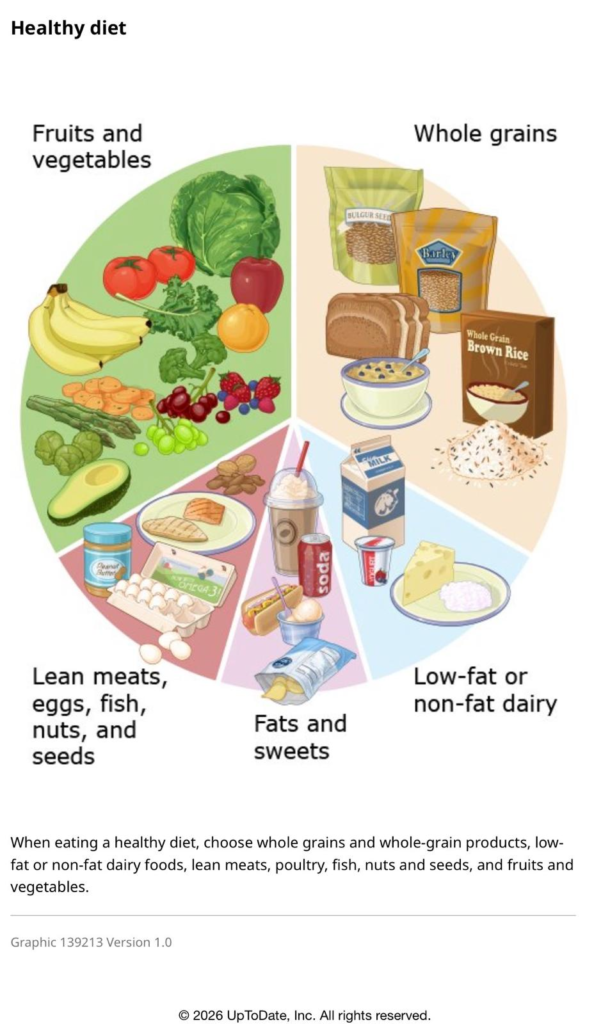
Main dietary changes that help lower blood pressure
Reduce Sodium (Salt)
- Most dietary sodium comes from restaurant meals, frozen foods, canned foods, and processed foods, not from the saltshaker.
- Read nutrition labels and compare sodium content between products.
- A low-sodium diet is generally considered less than 2,400 mg sodium/day.
- Many experts recommend aiming for less than 1,500 mg/day if possible, especially for people with hypertension.
Reduce Alcohol
- Excess alcohol can raise blood pressure and make hypertension harder to control.
- Typical drink sizes:
- 5 oz wine
- 12 oz beer
- 1 oz hard liquor
- Higher-risk intake is generally more than 2 drinks/day for men or more than 1 drink/day for women.
- Binge drinking (4–5 drinks within about 2 hours) is particularly harmful.
Caffeine and Blood Pressure
- Caffeine can affect blood pressure, but its impact depends largely on how regularly you consume it.
- People who do not regularly consume caffeine: Caffeine can cause a temporary increase in blood pressure after consumption.
- Regular caffeine users: A moderate amount of caffeine (about the amount in two cups of coffee per day) generally does not have a significant effect on blood pressure.
- High caffeine intake: Large amounts of caffeine—such as those found in some energy drinks, supplements, or very large coffee beverages—may increase blood pressure in people who are sensitive to caffeine.
Caffeine — Caffeine can temporarily increase blood pressure in people who don’t consume it regularly. In regular caffeine users, a moderate amount of caffeine (equivalent to approximately two cups of coffee daily) usually does not affect blood pressure. However, excessive amounts of caffeine (such as in many supplements and large-sized beverages) may raise blood pressure in susceptible people.
Eat More Fruits and Vegetables
- Increasing fruits and vegetables is associated with lower blood pressure and better overall health.
- This approach is a major component of the DASH diet, which has strong evidence for lowering blood pressure.
Practical Ways to Start
- Choose fresh or frozen vegetables without added sauce.
- Rinse canned beans and vegetables to remove some sodium.
- Look for products labelled no salt added, low sodium, or reduced sodium.
- Flavour foods with herbs, spices, lemon, vinegar, garlic, or pepper instead of salt.
- Fill at least half your plate with vegetables and fruit at meals.
- Limit processed meats, packaged snacks, instant noodles, canned soups, and fast food.
Dietary changes can have a meaningful effect. A DASH-style eating pattern combined with sodium reduction often lowers fairly significant systolic blood pressure in blood pressure, particularly when combined with a low-sodium diet especially in people with hypertension.
Important
If you already take blood pressure medication
Don’t stop or change it without discussing it with your healthcare provider. Home blood pressure monitoring can help track whether dietary changes are improving your numbers.
Exercise
Exercise and Blood Pressure
Regular physical activity can help lower blood pressure and improve cholesterol levels, even if it does not lead to weight loss.
Recommended Amount of Exercise
According to the American Heart Association, substantial health benefits can be achieved with either:
- 150–300 minutes per week of moderate-intensity aerobic activity
- Examples: brisk walking, cycling at a comfortable pace, water aerobics (OR)
- 75–150 minutes per week of vigorous-intensity aerobic activity
- Examples: jogging, running, fast cycling (PLUS)
- Muscle-strengthening (resistance) exercises at least twice per week
- Should involve all major muscle groups (legs, hips, back, chest, abdomen, shoulders, and arms)
Weight Loss and Blood Pressure
Weight Loss Can Lower Blood Pressure
Even modest weight loss can lead to meaningful reductions in blood pressure for people who are overweight or have obesity.
Research shows that blood pressure often decreases as body weight decreases, and even losing a relatively small percentage of body weight can improve cardiovascular health.
How to Lose Weight
Weight loss generally requires:
- Reducing calorie intake
- Eating fewer calories than your body uses.
- Emphasizing nutrient-dense foods such as vegetables, fruits, lean proteins, whole grains, and legumes.
- Increasing physical activity
- Aerobic exercise (walking, cycling, jogging, swimming)
- Resistance training (strength exercises)
Combining dietary changes with regular exercise is usually more effective than either approach alone.
Additional Treatment Options
For some individuals, lifestyle changes alone may not be enough. A healthcare provider may recommend:
- Weight-loss medications
- Prescription medicines that help reduce appetite or improve weight loss.
- Weight-loss (bariatric) surgery
- Considered for certain people with severe obesity or obesity-related health conditions.
Avoid Taking Medications and Supplements that Increase Blood Pressure
In susceptible individuals, following medications can increase blood pressure.
- Nonsteroidal anti-inflammatory drugs or “NSAIDs” (such as ibuprofen and naproxen)
- Oral contraceptive (birth control) pills may increase blood pressure in some people.
- Additionally, any stimulant, including those found in some decongestants, weight loss products, and illegal drugs, can increase blood pressure.
If you are regularly consuming any of these substances, you should talk to your health care provider.
Sleep and Blood Pressure
Sleep plays an important role in regulating blood pressure. During normal sleep, blood pressure typically falls (“dips”) compared with daytime levels. Poor sleep can interfere with this process and contribute to high blood pressure.
How Sleep Affects Blood Pressure
- Too little sleep (generally less than 7 hours per night on a regular basis) is associated with a higher risk of developing hypertension.
- Poor-quality sleep (frequent awakenings, difficulty falling asleep, or nonrestorative sleep) may also raise blood pressure.
- Sleep deprivation can increase stress hormones and activate the nervous system, both of which can elevate blood pressure.
- Obstructive sleep apnea (OSA), a condition in which breathing repeatedly stops during sleep, is a common cause of difficult-to-control hypertension.
What if I still have High Blood Pressure
If you continue to have high blood pressure despite making lifestyle modifications, including changes in your diet, exercising more, and losing weight, you may need a medication to reduce your blood pressure. Medications for high blood pressure are discussed separately.
Why is monitoring of blood pressure important?
If you have high blood pressure (BP), measuring
and monitoring your blood pressure at home, or
home blood pressure monitoring (HBPM), is a critical
component in the overall management as it will
help to determine if your prescribed treatment is
adequate or if adjustments will be needed.
Goal of home
monitoring is
to reach blood
pressure
≤135/85 mmHg1
In Singapore, the Ministry of Health recommends
regular home blood pressure monitoring as the
readings taken at home are usually slightly lower compared to clinic or office measurement.1
This is
commonly known as “white-coat” hypertension,
when a person is in an alerted response state
and resulted in an exaggerated blood pressure
measurements.2
Regular home blood pressure monitoring allows
you to measure your blood pressure in a familiar
environment and provides a large number of
measurements, which allows for a more reliable
assessment of the variations over a longer period of
time.
How to measure your blood pressure
Knowing how to measure your own blood pressure
also helps ensure that it is well controlled because
prolonged and extreme fluctuations in your blood
pressure can put you at higher risk of cardiovascular
complications in the long term.3
Advantages of Regular Home Blood Pressure Monitoring
Reduces error from white-coat hypertension
White-coat hypertension is when
the BP readings by your doctor,
who usually wears a white coat, are
usually higher than if your BP were
measured outside of the clinic or
measured by someone else.2
- May result from patients’ stress
- May indicate a higher risk of developing high BP in the long term
Home BP monitoring helps
determine if a patient is truly
hypertensive.
Helps in the management of chronic diseases
Chronic diseases that are often present alongside
high blood pressure include type 2 diabetes
mellitus and kidney failure.
Poorly controlled BP can worsen these conditions.
Home BP monitoring can help ensure that your BP
is well controlled or if further intervention
is needed.
Cost-effective
Home BP monitoring allows for
successful detection and early
treatment of hypertension,
which may help reduce costs
by preventing
future complications.4
Helps you take ownership of your health
Home BP monitoring empowers
you to take responsibility for
your own health. Keeping track
of your own BP can help you
to be more compliant
with your therapy5
Measuring your Blood Pressure: Tips and Trick
Blood pressure measurements may be taken twice
daily, ie, in the mornings and evenings.
Automatic or digital blood pressure devices are
generally recommended for convenience and easier
use. Digital monitors that are fitted on the upper arm
are generally the most accurate.
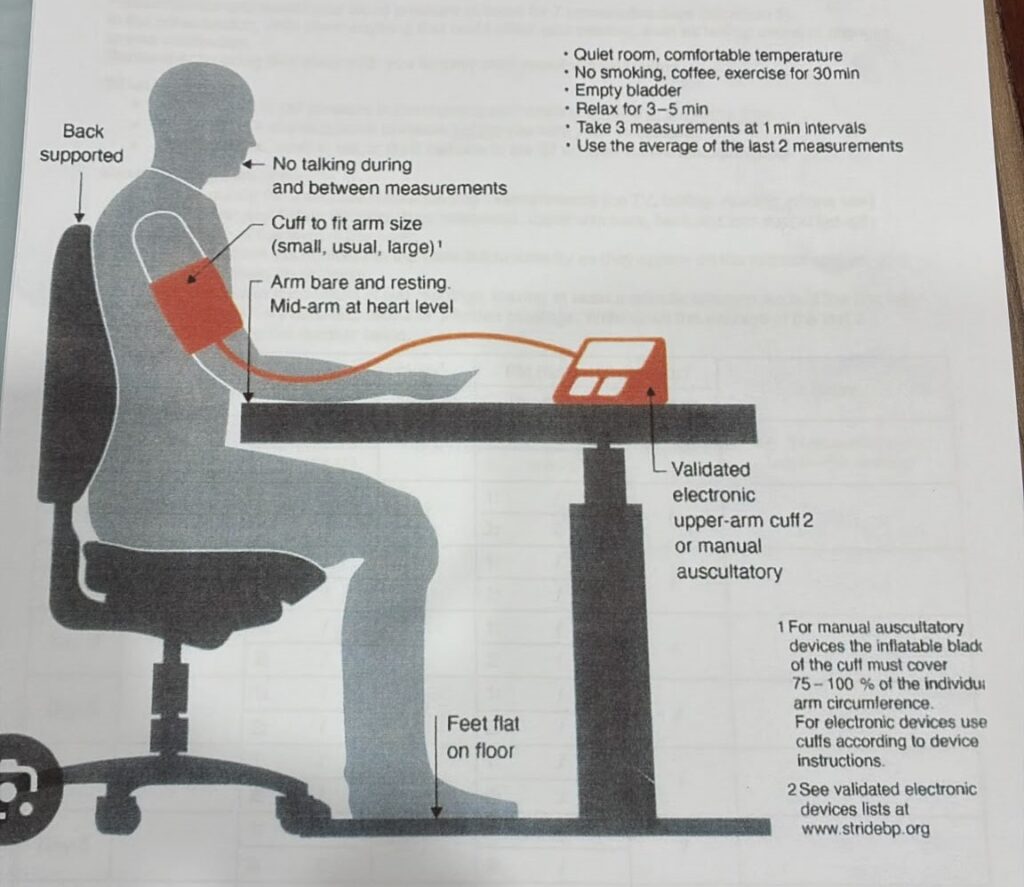
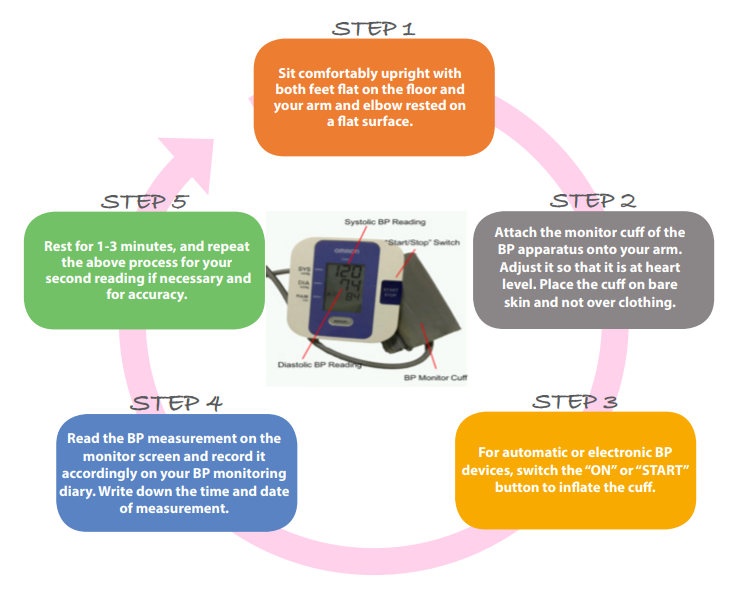
The following step-by-step instructions should
guide you on how to measure your blood pressure
accurately. Remember to record your blood pressure
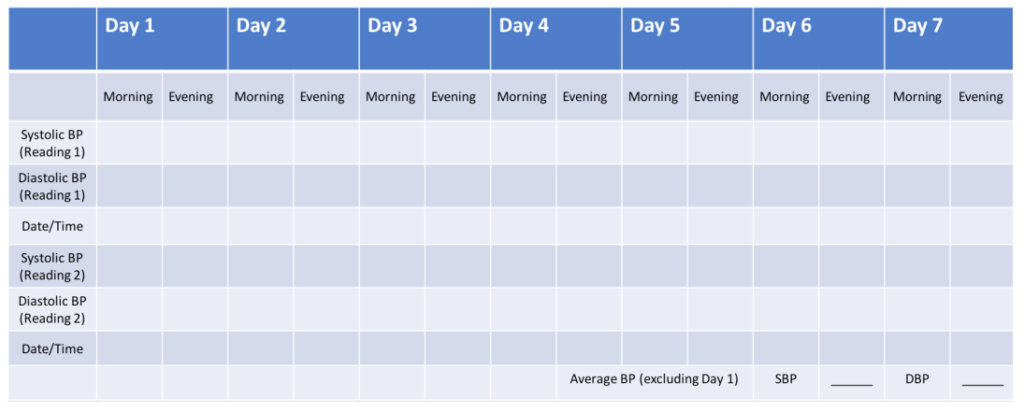
measurements on a monitoring sheet such as in
Table 1, and bring them with you on your next
doctor’s appointment for reference and discussion.
Tips to Remember when Measuring your Blood Pressure6
IMPORTANT!6
Have at least 5 minutes of
seated rest before taking your
BP, whether in the morning of
evening. Avoid food, caffeine,
smoking, or alcohol at least
30 minutes before measuring
your BP—these may increase
your BP.
IMPORTANT!6
The inflatable cuff should
be properly fitted to ensure
accurate BP measurement. Ask
your healthcare provider what
cuff is appropriate for you.
Table 1. Sample blood pressure monitoring chart
References
- 1 Ministry of Health (MOH) Singapore. Hypertension: MOH Clinical Practice Guidelines, 2017. Available at: https://www.moh.gov.sg/content/dam/moh_web/HPP/Doctors/cpg_medical/current/2017/ hypertension/cpg_Hypertension%20Booklet%20-%20Nov%202017.pdf. Accessed February 19, 2018.
- 2 White coat hypertension: When blood pressure rises at the doctor’s office. Mayo Clinic website. Available at: https://www.mayoclinic.org/diseases-conditions/high-blood-pressure/expert-answers/white-coat-hypertension/faq-20057792. Accessed February 26, 2018.
- 3 Setia S, Subramaniam K, Tay J, Teo B. Vasc Health Risk Manag 2017;13:275-285.
- 4 Arrieta A, Woods JR, Qiao N, Jay SJ. Hypertension 2014;64:891-896.
- 5 Harvard Health Publishing. Harvard Medical School. Available at: https://www.health.harvard.edu/blog/checking-blood-pressureat-home-pays-off-201307036436. Accessed April 7, 2018.
- 6 Get the most out of home blood pressure monitoring. Mayo Clinic website. Available at: https://www.mayoclinic.org/diseases-conditions/high-blood-pressure/ in-depth/high-blood-pressure/art-20047889 and https://www.mayoclinic.org/diseases-conditions/high-blood-pressure/in-depth/high-blood-pressure/art-20047889?pg=2. Accessed February 27, 2018.