Self-Monitoring of Blood Sugar
- Keeping your blood sugar levels within the target range can help reduce your risk of diabetes-related complications. Self-monitoring your glucose levels can help you better understand how food, physical activity and insulin dose affect your blood sugar levels, and make the necessary changes to optimise your diabetes control.
- Blood sugar targets can be individualised in order to prevent risk of hypoglycaemia (too low levels of blood sugar) or other adverse effects associated with blood sugar control that is too tight.
- Discuss with your healthcare team if you need to selfmonitor your blood sugar, which tools you should use and how often to use it.
- Your target blood sugar range can depend on: age, lifestyle and overall health.
When to check blood sugar levels:
- Before meals
- Two hours after a meal
- Before bedtime
- Before and after exercise
- When feeling unwell
- Other times as necessary, as discussed with your healthcare professional
Why is Blood Sugar Monitoring Important?
- Gives you a clear idea of your blood sugar level at a given time
- Informs if you have hypoglycaemia (blood sugar too low) or hyperglycaemia (blood sugar too high) at a given time
- Tells you how your lifestyle and medication regimen is affecting your blood sugar levels
- Helps you and your diabetes healthcare team evaluate and determine the best management strategy for you
How to Monitor Blood Sugar
Blood Glucose Meter
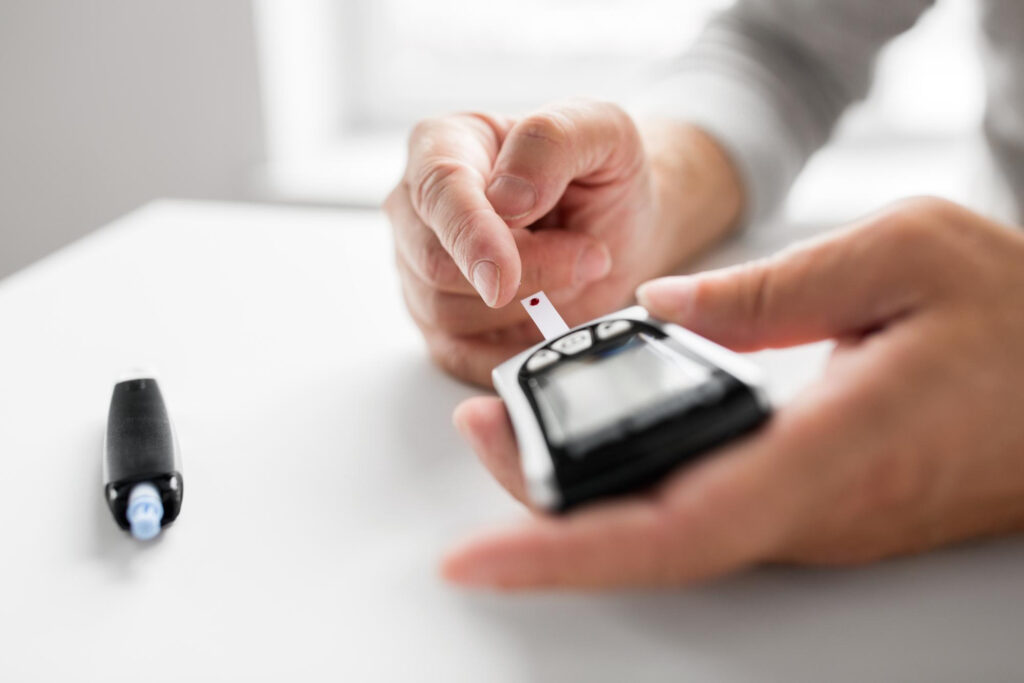
- Blood sugar level can be easily monitored using a Blood Glucose Meter.
- Wash your hands with soap and water and dry with tissue
- Prick your finger and put a small drop of blood on the meter’s test strip
- Your blood sugar level will appear on the meter within seconds
- A blood glucose meter is usually the least expensive home testing option, but it only reveals your blood sugar level at the time of check
- Blood sugar and interstitial fluid (fluid found in spaces around body cells) glucose levels are usually similar to each other, and glucose levels can also be measured from the interstitial fluid. There are two types of monitors that measure interstitial fluid glucose: flash glucose monitors and continuous glucose monitors.
How to Monitor Blood Sugar
Flash Glucose Monitor (FGM)
- It consists of a sensor and a reader, and depending on the type of sensor, it is placed either at the back of the upper arm, on the abdomen or the upper buttocks.
- FGMs can be used up to 14 days. It allows you to view interstitial fluid glucose levels at the time of check and can tell you if your glucose levels are rising, falling or stable. FGMs can also give you a report on the daily pattern of your glucose levels.
Pros
- Does not require blood sugar (finger prick) calibration
Cons
- Some do not have alarms
- Sensor readings are not automatically synced with the reader. You will need to flash the reader over the sensor to record your glucose readings.
How to Monitor Blood Sugar
Continuous Glucose Monitoring (CGM)
- It consists of a sensor, a transmitter and a receiver. The sensor typically needs to be replaced every 3 to 7 days. As it collects glucose readings every few minutes, the CGM is able to give you a more complete picture of your glucose profile compared to a blood glucometer.
Pros
- Triggers alarms if glucose levels are too high or low
Cons
- Some types of CGMS need calibration with blood glucose meter (i.e., will require finger prick)
Monitor your blood sugar level before and after meals
|
Blood Sugar
|
Before Food
|
2 Hours after Food
|
|---|---|---|
|
Too high
Risk of hyperglycaemia |
>7.0 mmol/L
|
>10.0 mmol/L
|
|
Optimal
|
4.0 to 7.0 mmol/L
|
4.0 to 10.0 mmol/L
|
|
Too low
Hypoglycaemia |
<4.0 mmol/L
|
<4.0 mmol/L
|
Your targets may vary depending on your condition; discuss this with your doctor or care team