
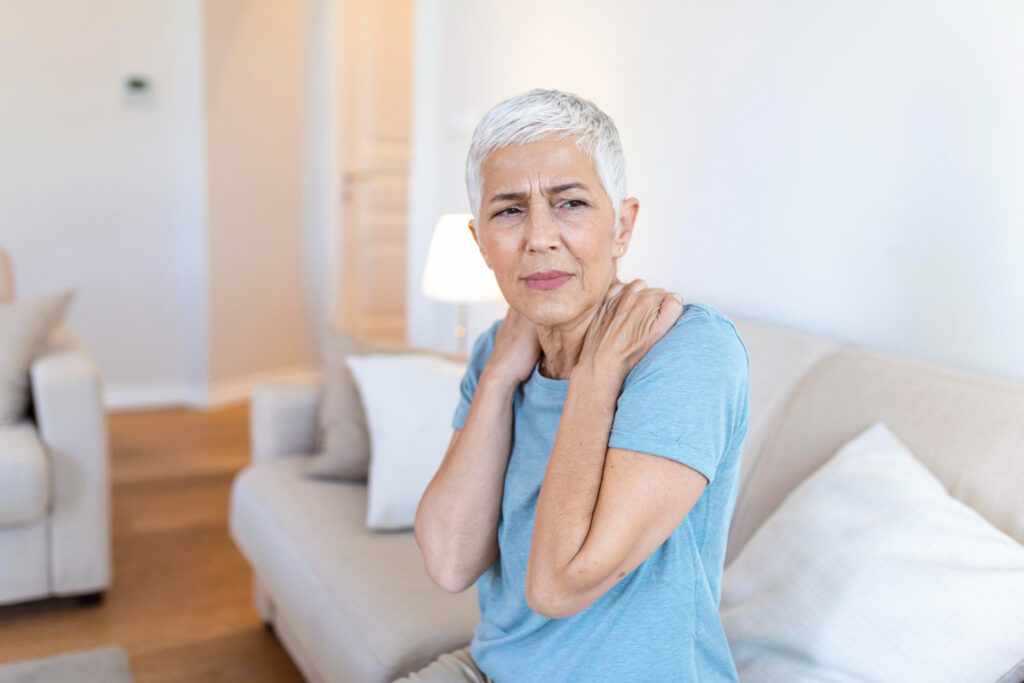
Osteoporosis
Osteoporosis is a condition in which bones become weak and fracture easily. Women are at higher risk after menopause because estrogen levels decline.
Prevention
- Healthy diet: Ensure adequate calcium, vitamin D, protein, and calories.
- Calcium: 1000 mg/day for premenopausal women and men; 1200 mg/day for postmenopausal women.
- Vitamin D: 600 IU/day for most adults; 800 IU/day for postmenopausal women and adults over 70*. (Requirement varies for individuals).
- Regular exercise: At least 30 minutes, 3 times per week. Weight-bearing and resistance exercises help maintain bone density, improve strength, and reduce fall risk.
- Avoid smoking: Smoking accelerates bone loss and increases fracture risk.
- Limit alcohol: More than 2 drinks per day increases fracture risk.
- Prevent falls: Improve home safety, maintain good lighting, check vision regularly, and review medications that may increase fall risk.
Medications That May Increase Bone Loss
Medications That May Increase Bone Loss
- Glucocorticoids (e.g., prednisone)
- Heparin
- Some antiseizure medications
- Aromatase inhibitors used for breast cancer treatment
Screening
Experts recommend bone density screening for:
- All women aged 65 years and older
- Postmenopausal women younger than 65 who have risk factors (such as prior fractures, smoking, heavy alcohol use, certain medical conditions, or medications)
Key Message
The best ways to prevent osteoporosis are to get enough calcium and vitamin D, exercise regularly, avoid smoking, limit alcohol, and reduce fall risk. Early screening can identify osteoporosis before fractures occur.