Overview of Cholesterol
Cholesterol is a blood lipid required for health, but elevated levels increase the risk of heart attacks and strokes.
Lipid Types:
- LDL: The “bad” cholesterol; high levels increase cardiovascular risk.
- HDL: The “good” cholesterol; high levels help lower cardiovascular risk.
- Non-HDL: Total cholesterol minus HDL.
- Triglycerides: A non-cholesterol blood lipid that also raises risk when elevated.
- Total Cholesterol: The sum of LDL, HDL, and a small portion of triglycerides.
Standard target cholesterol numbers (for individuals without existing heart disease) -Source: Uptodate
Cholesterol and triglyceride measurements in the US and elsewhere
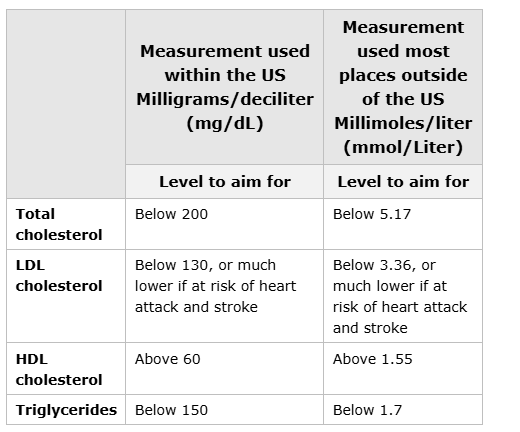
Cholesterol is measured differently in the US than it is in most other countries. This table shows values used within and outside of the US. It includes the cholesterol and triglyceride levels that most people who do not have heart disease should aim for.
Risk Assessment & Medication
- Risk Factors: High cholesterol is just one component of cardiovascular risk. Other major factors include smoking, high blood pressure, older age, poor diet, and a family history of early heart disease.
- Medications – Statin Therapy: Statins are the primary medication used to lower cholesterol. They are universally recommended—regardless of baseline cholesterol levels—for individuals with diabetes, heart disease, peripheral artery disease, abdominal aortic aneurysms, or a history of heart attack or stroke.
- Other cholesterol lowering medications: PCSK9 inhibitors such as Alirocumab, Evolocumab, ACL inhibitors such as Bempedoic acid, Ezetimibe, Fenofibrate, Cholestyramine, Niacin
- Adherence: Cholesterol medications must be taken consistently as prescribed (sometimes with food or in the evening) to effectively prevent stroke, heart attack, and death, even if they do not change how, you physically feel.
Lifestyle Management
- Dietary Changes: A “heart-healthy” diet includes lots of fruits and vegetables, fiber, and healthy fats (like those found in fish, nuts, and certain oils). Lower LDL by avoiding saturated fats (red meat, butter, cheese, fried foods). Lower triglycerides by limiting alcohol, sugar, and fried foods.
- Physical Health: Engage in regular aerobic activity (like walking) and muscle-strengthening exercises.
- Weight Management: Losing excess body weight supports healthier lipid profiles and boosts overall cardiovascular health