
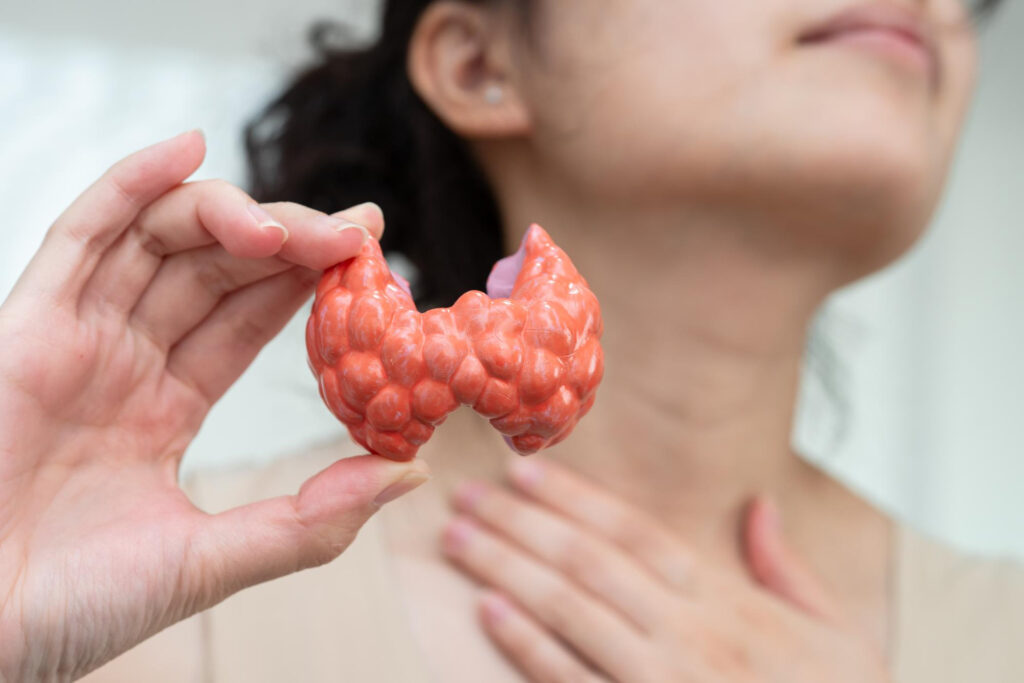
Hypothyroidism, or an underactive thyroid, occurs when the thyroid gland in the neck produces too little thyroid hormone. This hormone regulates how your body uses and stores energy. It is the opposite of hyperthyroidism, where the gland makes too much hormone.
Causes
The condition can be triggered by several factors that impair the thyroid’s hormone production:
- Immune System Issues: The body’s defense mistakenly attacks the thyroid gland (Hashimoto’s thyroiditis), making it one of the most common causes.
- Thyroidectomy: Surgical removal of the thyroid gland.
- Radioiodine Therapy: A treatment for hyperthyroidism that destroys part of the thyroid gland.
- Radiation: High doses targeted at the neck area (e.g., for cancer treatment) that damage the gland.
- Medications: Certain types of prescription drugs.
Symptoms and Risks
While some individuals experience no symptoms, most people experience a profound sense of fatigue.
Common Symptoms:
- Lack of energy
- Sensitivity to cold temperatures
- Coarse or thinning hair
- Constipation
Risks of Leaving It Untreated:
- Heart Issues: Weakened and slowed heart rates, leading to shortness of breath during exercise and ankle swelling.
- Cardiovascular Risks: Elevated blood pressure and high cholesterol, increasing the risk of heart complications.
- Fertility & Pregnancy: Disrupted menstrual cycles, difficulty conceiving, and an increased risk of miscarriage.
Diagnosis and Treatment
- Testing: Doctors diagnose the condition using a straightforward blood test.
- Medication: Treatment requires taking thyroid hormone pills every day, usually for the rest of your life, to replace what your body cannot produce. Both brand-name and generic forms work equally well.
- Monitoring: A follow-up blood test is conducted after 6 weeks to verify hormone levels and safely adjust the dosage if necessary.
- Safety Warning: Never change your dose independently. Taking too much thyroid hormone can cause dangerous heart rhythm problems and bone damage.
How should I take or use this medication? (Food-drug interactions)
- Take Levothyroxine in the morning on an empty stomach, at least 30 minutes before the first food or drink of the day. You may take it with half a glass of water.
- Avoid supplements containing calcium or iron, antacids, milk or dairy products within 2 to 4 hours of taking Levothyroxine as taking them together might decrease the absorption Levothyroxine into your body
Pregnancy Guidelines with Hypothyroidism
- Feasibility: You can safely try to get pregnant; many individuals with hypothyroidism experience healthy pregnancies.
- Dose Adjustments: Your doctor will likely need to increase your thyroid hormone dosage during pregnancy to meet the body’s higher demands.
- Monitoring Schedule: Thyroid hormone levels will be tested 4 weeks after any dose adjustment, and at least once during each trimester
- Preconception TSH target levels: TSH Goal: Schedule a blood test immediately to check your Thyroid Stimulating Hormone (TSH) level.
Hyperthyroidism: Graves' disease
- Definition: Graves’ disease is an autoimmune disorder causing hyperthyroidism (too much thyroid hormone).
- Mechanism: The immune system makes autoantibodies that mistakenly attack and overstimulate the thyroid gland.
- Risk Factors: More common in females, those with a family history, smokers
Key Signs & Symptoms
- Systemic: Weight loss, anxiety, tremors, fatigue, heavy sweating, heat intolerance, and rapid/irregular heartbeats.
- Physical: Weakness in arms/thighs, frequent bowel movements, and a swollen neck (goiter).
- Eye Problems: Bulging, swelling, pain, grittiness, watery eyes, double vision, or washed-out color vision.
- Skin: Rarely, thick or lumpy skin on the shins.
Diagnosis & Treatment
- Testing: Done via blood tests (hormones and antibodies), thyroid ultrasound, eye CT/MRI (in selected cases), or a Radioactive Iodine Uptake (RAIU) test.
- Symptom Relief: Beta-blockers help calm rapid heart rates and tremors.
- Hormone Reduction: Managed through antithyroid medications, surgery, or oral radioiodine to destroy overactive tissue.
Antithyroid drugs: Methimazole, Carbimazole, Propylthiouracil (PTU)
- Mechanism: Antithyroid drugs lower T3 and T4 hormones by blocking new hormone production.
- Timeline: It takes 3 to 8+ weeks to normalize hormone levels because existing blood and thyroid stores must deplete first.
- Adherence: Doses must be taken consistently; skipping pills allows the thyroid to quickly rebuild hormone stores and trigger a relapse.
- Eye Management: Addressed using sunglasses, saline drops, steroids, eye patches, or surgery.
- Self-Care: Quitting smoking is crucial to reduce risks and support recovery.
Important Pregnancy Rules
- Timing: It is best to treat hyperthyroidism before getting pregnant.
- Restrictions: Radioiodine and surgeries are unsafe during pregnancy. Patients must wait 6 months after these treatments before conceiving.
- Fetal Impact: A small number of babies can inherit hyperthyroidism. Doctors will monitor the fetus and treat the baby after birth if necessary.